
Two-Person Furniture Delivery: When One Driver Isn't Enough
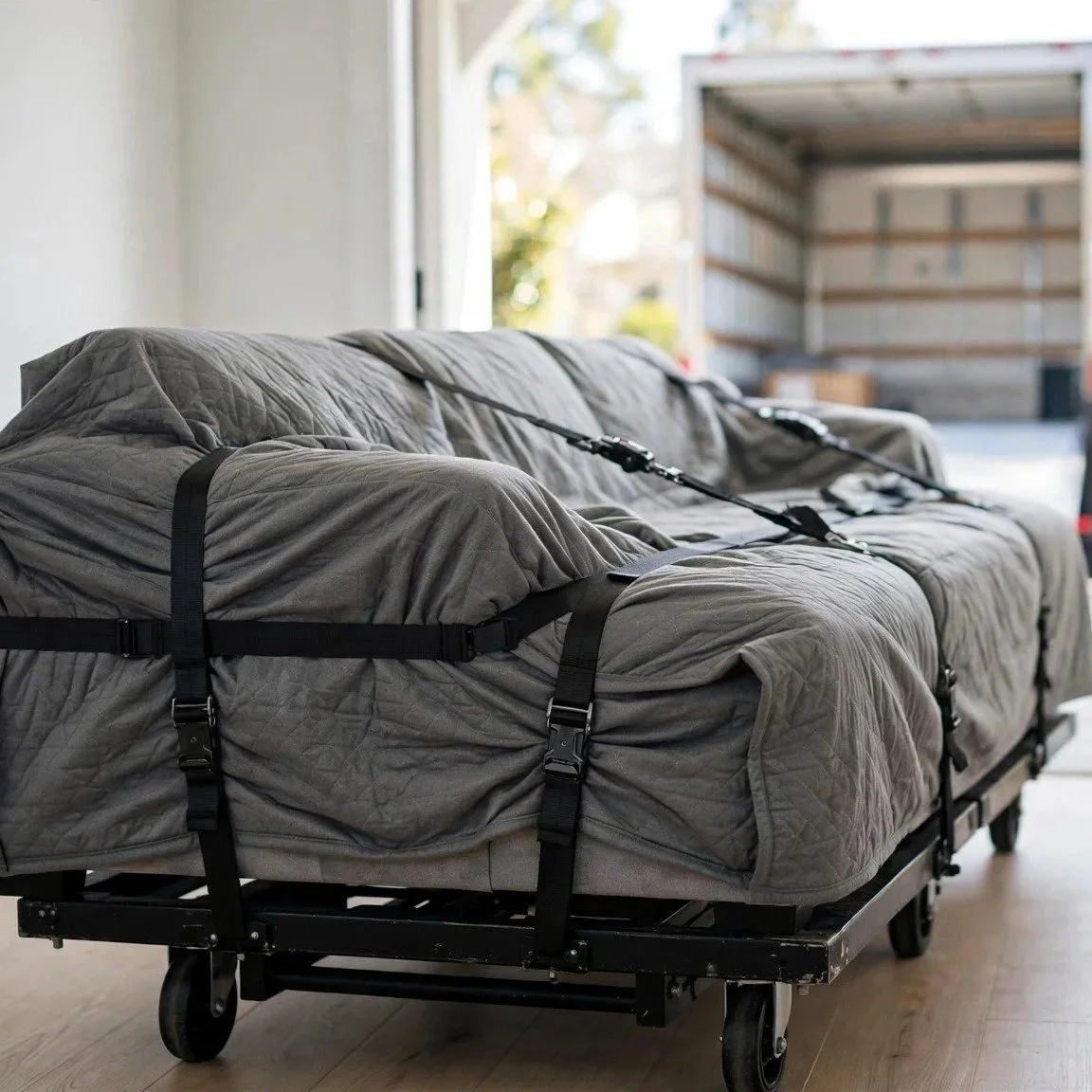
A queen mattress weighs less than a treadmill but fights back harder, folding, sliding, and catching on every corner between the truck and the bedroom. That gap between what looks manageable and what actually moves safely is the whole reason two-person delivery exists. One person can slide a lamp box across a porch. Getting a reclining sectional up a staircase and around a landing without gouging the drywall or wrenching a back is a different job, and it takes two sets of hands working in sync.
This guide explains what two-person delivery is, when an item calls for it, what the crew actually does once they arrive, and how the service sits on a spectrum between a curbside drop and full white-glove placement.
What Two-Person Delivery Actually Means
Two-person delivery, sometimes called two-man delivery, means a crew of two handles your item from the truck into your home rather than leaving it at the property line. The two-count is not about doubling speed. It is about safe lifting and controlled maneuvering.
Heavy furniture is a team lift. Once an item passes roughly 50 to 75 pounds, or gets long and awkward enough that one person cannot see both ends, solo handling turns risky for three things at once: the product, the home, and the person carrying it. A dropped headboard cracks. A pivoted dresser scrapes a stair rail. A lifter twisting under an off-balance load strains a back. A second person on the other end keeps the item level, spots the tight corners, and shares the weight so no single joint takes the full load.
That is the core distinction from a single-driver route. A lone driver on a parcel-style run is set up to unload lighter, boxed goods and leave them where the truck can reach: a porch, a garage, a lobby. The moment an item needs to be lifted as a unit and steered through interior space, the job outgrows one person.
Why Item Weight and Size Drive the Service
Before the details of doorways and stairs, understand the one factor that decides everything: the item itself. Weight, length, and how the mass is distributed determine whether a delivery is a one-person drop or a two-person carry.
A compact nightstand can ride in on a hand truck by one driver. A three-seat sofa cannot, because its length means one carrier loses sight of the trailing end, and a corner they cannot see is a corner they will hit. Long, wide, or top-heavy pieces need a person at each end to keep the load balanced and to call out clearances in real time.
Mass matters as much as shape. Solid-wood and stone-topped pieces pack a lot of weight in a small footprint, so even a short item can exceed a safe single-person lift. This is why a small marble-topped console can demand two people while a large but hollow wardrobe box might not.
Items That Almost Always Call for Two People
Sofas, loveseats, and sectionals: long, and sectionals arrive in multiple heavy segments that each need controlled placement.
Mattresses and box springs: deceptively heavy, floppy, and prone to catching on door frames and stair rails.
Dressers, armoires, and China cabinets: dense casework, often with glass or drawers that shift the balance.
Major appliances: refrigerators, washers, and ranges are rigid, heavy, and easy to damage floors with.
Dining tables and desks: wide tops that will not clear a doorway held by one person.
Anything bound for an upper floor: stairs multiply the risk of any heavy item.
When You Truly Need Two-Person Delivery
The item is the first test. The path to the room is the second. Even a moderate piece can demand two people once the route gets complicated.
WARNING: Heavy furniture is a team lift. Carrying weight up or down a flight shifts the whole load onto the lower carrier and turns any misstep into a fall, and a lifter twisting under an off-balance load strains a back. Once an item passes roughly 50 to 75 pounds or is too long to see both ends, solo handling risks the product, the home, and the person carrying it.
Tight turns and narrow openings are the second. A hallway that dead-ends at a bedroom door, a doorway an inch narrower than the item, a switchback at the top of a stairwell: these are where solo carriers get pinned and where walls get scraped. Two people can tip, angle, and pivot a piece through a gap that one person cannot manage without setting it down.
Upstairs bedrooms and second-floor living spaces combine both problems. Getting a king mattress or a bedroom set to an upper floor is the textbook two-person job, and it is where a single-driver service will simply leave the item downstairs.
Long carries from the truck count too. When the truck cannot pull close, such as a gated community, a long driveway, or an apartment with distant parking, the sheer distance under load makes two carriers the safe choice even for a mid-weight piece.
What the Crew Does Once They Arrive
A two-person crew does far more than lift. The value is in the sequence of small decisions that keep your item and your home unmarked.
The Core Handling Steps
Assess the path first: Before anything comes off the truck, the crew walks the route from door to room, notes the tight spots, and plans how each piece will turn.
Protect the surfaces: Floor runners, blankets, and corner guards go down on hardwood, tile, and stair edges so nothing gets scratched or dented in transit.
Carry and steer as a pair: One leads and one follows, each calling clearances, so the item stays level and off the walls through every doorway and turn.
Place it in the room: The item lands where you want it, not just inside the front door. That means the actual bedroom, the actual wall, the spot you point to.
Whether the crew goes further, into removing packaging, light assembly, and hauling away the boxes, depends on the service tier the retailer or shipper booked. Basic two-person delivery gets the item into the room. Higher tiers add the finishing work.
How It Differs From Curbside and White-Glove
These service levels sit on a spectrum, and knowing where two-person delivery falls helps you read what you are actually buying.
Curbside is the floor of the range. The driver brings the item to the curb, driveway, or building entrance and leaves it there. Getting it inside is on you. This works for light, boxed goods and for buyers who have help waiting.
Threshold delivery goes one small step further, into the entryway or garage, but still stops at the first dry, safe spot inside the door. No stairs, no room placement.
Two-person, room-of-choice delivery is the middle of the spectrum and the level most large-furniture buyers actually want. The crew carries the item to the room you choose, upstairs if needed, and sets it in place.
White-glove is the top tier. It includes the two-person carry and placement, then adds unpacking the item from its box, light assembly such as attaching legs or setting a bed frame, positioning the piece exactly, and removing all the packaging and debris. Some white-glove services also include modest debris removal or a quick wipe-down. The line between "two-person" and "white-glove" is really about how much finishing work is bundled in, not about the number of carriers, since both use a crew of two or more.
The Planning That Prevents Damage
Most delivery damage is preventable, and it gets prevented before the truck arrives. A few measurements save a lot of grief.
Measure Before Delivery Day: Compare the item's largest dimension against the narrowest point on its path. Measure doorway width and height, the diagonal clearance of any turn, stairwell width, and the swing space at the top of stairs. Furniture often has to go through a doorway on an angle, so the diagonal, not just the width, is the number that matters. If the piece will not fit, it's better to know before it is halfway up the staircase.
Clear the path in advance. Move rugs that slide, lift low-hanging fixtures out of the arc of a tall piece, secure pets, and clear the destination room so the crew can set the item down and adjust it. A blocked landing or a cluttered bedroom turns a clean placement into an awkward shuffle where things get bumped.
Why Retailers Offer Two-Person Delivery
For furniture retailers and direct-to-consumer brands, offering a proper two-person option is a money decision as much as a service one. Damage claims are expensive. A sofa gouged on a stair rail or a dresser dropped on a landing becomes a return, a replacement, and a refund, plus the cost of the second delivery attempt. Sending a trained pair the first time is cheaper than eating a claim and reshipping.
The customer experience side matters just as much. A buyer who watches a crew set a bed exactly where they wanted it, then carry the boxes away, remembers that. A buyer left staring at a 200-pound crate on the driveway remembers that too, and leaves a review about it. For brands competing on the whole purchase, not just the price, the final-mile handoff is the last impression, and it is the one that sticks.
FAQs
How much can two delivery people safely lift together?
Industry lifting guidance generally caps a comfortable single-person lift near 50 pounds under good conditions, and lower when the load is awkward, low to the ground, or carried far. A trained pair sharing a balanced load can handle substantially more, but the real limit is often reach and clearance, not raw strength. A piece that is light enough but too long for one person to see both ends is still a two-person item.
Do I have to be home for a two-person delivery?
Yes, in nearly all cases. Because the crew places the item in a specific room and often needs you to confirm the spot, sign for the piece, and point out the path, an adult usually has to be present for the delivery window. Curbside and threshold drops sometimes allow an unattended release, but room-of-choice and white-glove service almost always require someone on site.
What happens if my furniture doesn't fit through the door?
The crew will try alternate approaches first: removing the door from its hinges, taking the legs off the piece, or angling it through on the diagonal. If it still will not fit, some sofas and sectionals are built to disassemble, and a few are designed so the back unbolts for exactly this reason. When nothing works, the item goes back on the truck undelivered, which is why measuring the path in advance is worth the ten minutes.
Is two-person delivery the same as furniture assembly?
No. A standard two-person delivery gets the item into the room but may leave it boxed or partially unassembled. Assembly, such as attaching sofa legs, bolting a bed frame together, or setting a table base, is a white-glove add-on. If you need the piece fully built and ready to use, confirm that assembly is included when you book, because the two-person carry alone does not guarantee it.
Can two-person delivery move my old furniture out?
Sometimes, but it is a separate arrangement, not a default. Many services offer old-mattress or old-furniture removal as a bookable extra, since hauling away a used piece adds a trip and a disposal step. It is not automatically bundled with a new-item delivery, so ask for it up front rather than assuming the crew will take the old sofa when they bring the new one.
Does weather affect a two-person delivery?
It can. Rain and slick surfaces make stairs and ramps more dangerous under a heavy load, and heat inside a non-climate-controlled truck can stress adhesives, leather, and finishes on sensitive pieces during a long route. Reputable crews slow down, add extra floor protection for wet shoes, and plan sensitive items around the harshest part of the day rather than pushing through and risking a slip or a damaged finish.
Getting the right piece into the right room without a scratch comes down to matching the service level to the item and prepping the path before the truck arrives. When the piece is heavy, valuable, or needs assembly, the higher levels protect both the furniture and your home.