
Will It Fit? How to Measure Before Furniture Delivery
A new sectional or a king headboard arrives, the crew carries it to your door, and the piece stops cold at the frame because nobody measured the path. That scene is almost always avoidable. The furniture itself is only half the math. The other half is the route it travels: the front door, the hallway turn, the stairwell, the lift, and the doorway of the room where it lands. Measure both, and a delivery that looked risky becomes routine.
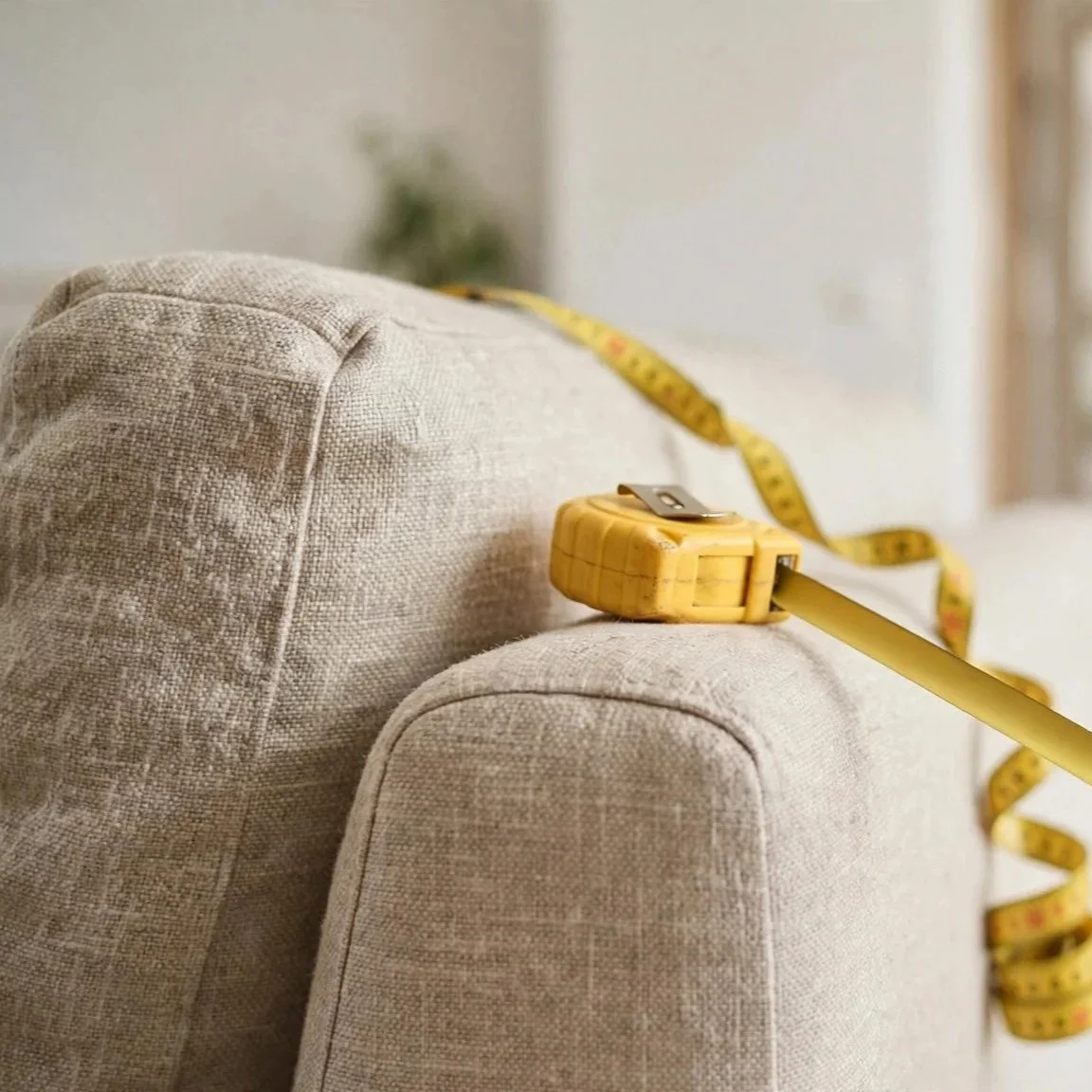
Measure The Piece And The Path, Not Just The Sofa
Most people measure the couch, glance at the door, and call it good. The couch clears the door width, so the assumption is that it clears everything. It does not work that way. Furniture does not float straight through on a level line. It gets tipped, angled, and rotated around corners, and every one of those moves needs its own clearance. The rule is simple: measure the piece completely, then measure the path from the truck to the final resting spot, and check the piece against every pinch point along the way.
Grab a metal tape measure, not a cloth one, and write every number down. Guessing by eye is where deliveries go wrong.
How To Measure The Furniture
Four numbers describe a big piece, and the fourth is the one most people miss.
Height, Width, and Depth: Height is floor to the tallest point. Width is the longest horizontal span, usually arm to arm on a sofa or side to side on a dresser. Depth is front to back. These three tell you the basic footprint and whether the item stands up in the destination room without hitting a ceiling fan or a light fixture.
Diagonal Depth, The Number That Turns Corners: Diagonal depth is the measurement that decides whether a sofa makes it up a stairwell or around a tight hall. To find it, stand a tape measure from the highest back corner of the sofa down to the front of the seat rail at an angle, following the line the piece would take if you tipped it on end. That diagonal runs smaller than the full height but larger than the depth, and it is the true width the piece needs when a crew stands it upright to thread a narrow passage. If your hallway or stairwell is tighter than the sofa's length, the diagonal depth is what gets it through, so measure it carefully.
The Will-It-Stand-On-End Trick: Before delivery day, test the geometry yourself. Measure the ceiling height in the narrowest part of the path, then compare it to the piece stood vertically on one end. If a tall wardrobe or a long sofa can be tipped upright without scraping the ceiling, a crew has far more room to maneuver around a corner. If it cannot stand up because the ceiling is too low, the crew has to keep it more horizontal, which needs more floor length in the turn. Knowing this in advance tells you whether a corner is even possible.
How To Measure The Delivery Path End To End
Walk the route the furniture will actually take, from where the truck parks to the room where it lands, and measure every choke point along the way.
Hallways and Turns: Width Plus Corner Clearance: A hallway has two measurements that matter: its straight width and the clearance at any turn. A long piece can travel down a wide hall easily and still jam at a ninety-degree corner, because turning it swings the trailing end into the wall. At each corner, measure the width of both connecting halls and picture the diagonal depth of the piece pivoting through. Sharp ninety-degree turns are the single most common place a delivery stalls, so give them extra attention.
Stairwells: Width, Ceiling, Landings, And The Switchback: Stairs demand the most measurements. Record the width between the walls or between the wall and the railing, the ceiling height above the treads (a low soffit over a staircase quietly kills clearance), and the depth of any landing where the piece has to pivot. On a switchback stair that doubles back on itself, the turn radius at the landing is the make-or-break number, because the piece has to rotate a full one hundred eighty degrees in that space. Also check what the stairs and railing can hold. A loaded piece plus two crew members is real weight, and a wobbly railing is not a handhold.
Lifts: Door, Cab, And The Diagonal Again: For an apartment or condo, measure the building lift door opening and the inside cab dimensions, including ceiling height, since a tall piece may only fit standing at an angle. Some buildings have a removable ceiling panel or a rear service door that adds usable diagonal room. Measure the cab's diagonal from a bottom corner to the opposite top corner, because that hidden diagonal is often what lets a long item ride up on the slant.
Tight Spots Worth Flagging: Between the big openings sit smaller hazards: stair railings that narrow the passage, low basement ceilings, pendant light fixtures and chandeliers hanging in the path, thermostats and wall sconces at shoulder height, and radiators that shrink a hallway. Note each one. A single low-hanging fixture can block a piece that clears everything else, and it is easy to remove a fixture ahead of time once you know it is in the way.
The Destination Room: The path can be perfect, and the delivery still fails if the piece cannot stand up once it arrives. Measure the room where it lands, confirm the sofa or bed can rotate off its side into position, and check that it clears ceiling fans, sloped ceilings, and window sills. Deep-seated recliners and sleeper sofas also need room to open, so leave clearance for the mechanism, not just the closed footprint.
When It Is Close: Doors Off, Legs Off, Or A Backup Plan
Measuring tells you the answer before the truck arrives, which leaves time to fix a tight fit instead of standing in a doorway improvising. Removing an interior door at the hinges is the quickest win and reclaims a couple of inches. Many sofas and tables ship with hairpin or screw-in legs that come off in minutes, dropping the height enough to clear a low frame. Some pieces disassemble further: a sectional splits into segments, a bed frame breaks down, a table separates from its base.
When the numbers simply will not work, a backup plan beats a forced lift. If nothing works, the honest fix is choosing a different piece that fits your access. Better to learn that from a tape measure than from a scratched wall and a sofa going back on the truck.
WARNING: A hoist through a window or over a balcony is rigging work for trained crews, not something to attempt yourself. Ropes, straps, and a heavy piece over a balcony edge is a serious fall-and-drop hazard, so leave it to pros who carry the equipment and insurance for it.
Think of the measuring pass like checking a bridge's clearance before you send a truck under it: the truck does not shrink, so you confirm the opening first.
What To Tell The Delivery Team Ahead Of Time
Your measurements are only useful if the crew knows them before they load the truck. Share the tight numbers in advance: the narrowest doorway, any sharp turn, the number of flights of stairs, and whether there is a lift or a switchback. Tell them whether the piece needs doors or legs removed on site so they bring the right tools. Cover the logistics too: gate or callbox codes, where the truck can park and how far that is from the door, lift reservations or certificate-of-insurance requirements in a building, and any HOA delivery windows.
Clear the path on delivery day so nobody is forced into an awkward, off-balance lift around an obstacle, which is where both injuries and wall damage happen. Move rugs and cords that cause trips, secure pets so a door left open is not a problem, and pull fragile items off the route. A crew that knows what is coming plans the carry and works safely instead of discovering the tight turn with the sofa already halfway up the stairs.
FAQs
How much clearance should I leave beyond the exact measurement?
Aim for at least two inches of breathing room on width and height wherever you can, and more at turns. An exact match on paper rarely works in practice, because hands need somewhere to grip, padding and shrink wrap add half an inch or so all around, and the piece flexes as it is angled. If a doorway and the furniture measure identically, treat that as a no-fit and plan to remove the door or the legs.
Does the direction of a door swing change whether furniture fits?
It can. A door that swings into the room you are entering blocks part of the opening and forces the piece to angle around it, while a door swinging away leaves the opening clear. If the swing works against you and the fit is tight, lifting the door off its hinges removes the obstacle entirely and often turns a no into a yes for the two or three inches the door and hinges occupy.
What is the widest sofa that typically fits through a standard interior door?
Interior doors commonly give a clear opening near thirty inches once the door is open, and exterior doors run wider. Most sofas up to about thirty-eight inches of diagonal depth clear a thirty-inch opening when stood on end and angled, but that depends entirely on your specific door and the turn just past it. Measure your own opening rather than trusting a rule of thumb, since a hall corner right behind the door often matters more than the door itself.
Should I measure before I buy or only before delivery?
Before you buy. Knowing your tightest doorway, hall turn, and stair clearance while you shop lets you rule out pieces that cannot reach the room and pick ones that will. Carry your three key numbers, the narrowest door, the tightest turn, and the stair width, on your phone. A piece that looks perfect in a showroom is the wrong buy if its diagonal depth beats your hallway.
Can a crew remove a window to get furniture in?
Sometimes, and it is more common than people expect for oversized pieces in older homes and high-rises. A large fixed window or a balcony door can be taken out to widen an opening, but that is skilled work, and reinstalling and resealing it matters as much as removing it. It is arranged ahead of time, never improvised on delivery day, and for upper floors it pairs with professional hoisting rather than any lift you would do on your own.
Do soft pieces like mattresses follow the same measuring rules?
Not exactly. A mattress flexes and can bow through a turn a rigid sofa never could, which buys extra room, but flexing has limits and a pillow-top or a boxed hybrid is stiffer than it looks. Box springs, by contrast, are rigid frames that do not bend at all and often struggle where the mattress passed easily, which is why split box springs exist for tight stairwells. Measure the box spring like a solid piece and give the mattress a little grace.