
Threshold vs. Room of Choice Delivery: 4 Levels Explained
You ordered a sofa, a mattress, or a dresser, and the checkout page asked you to pick a delivery option. The names sounded similar, and the descriptions were short, leaving you to guess where the piece would end up: on the sidewalk, inside the door, or set exactly where you wanted it. That choice matters more than most buyers expect, because it decides who carries the weight, how far the item travels into your home, and how much finished work happens before the crew leaves.
Furniture delivery is best understood as a spectrum, not a set of unrelated products. Each level goes one step deeper into the home and does a little more of the labor. Curbside stops at the edge of the property. Threshold crosses the first doorway. Room-of-choice carries the item to the room you name. Full white-glove does all of that, then finishes the job: box removal, assembly, placement, and debris cleanup. Once you see the four levels as a line from "least handled" to "fully handled," picking the right one for a specific piece gets much easier.
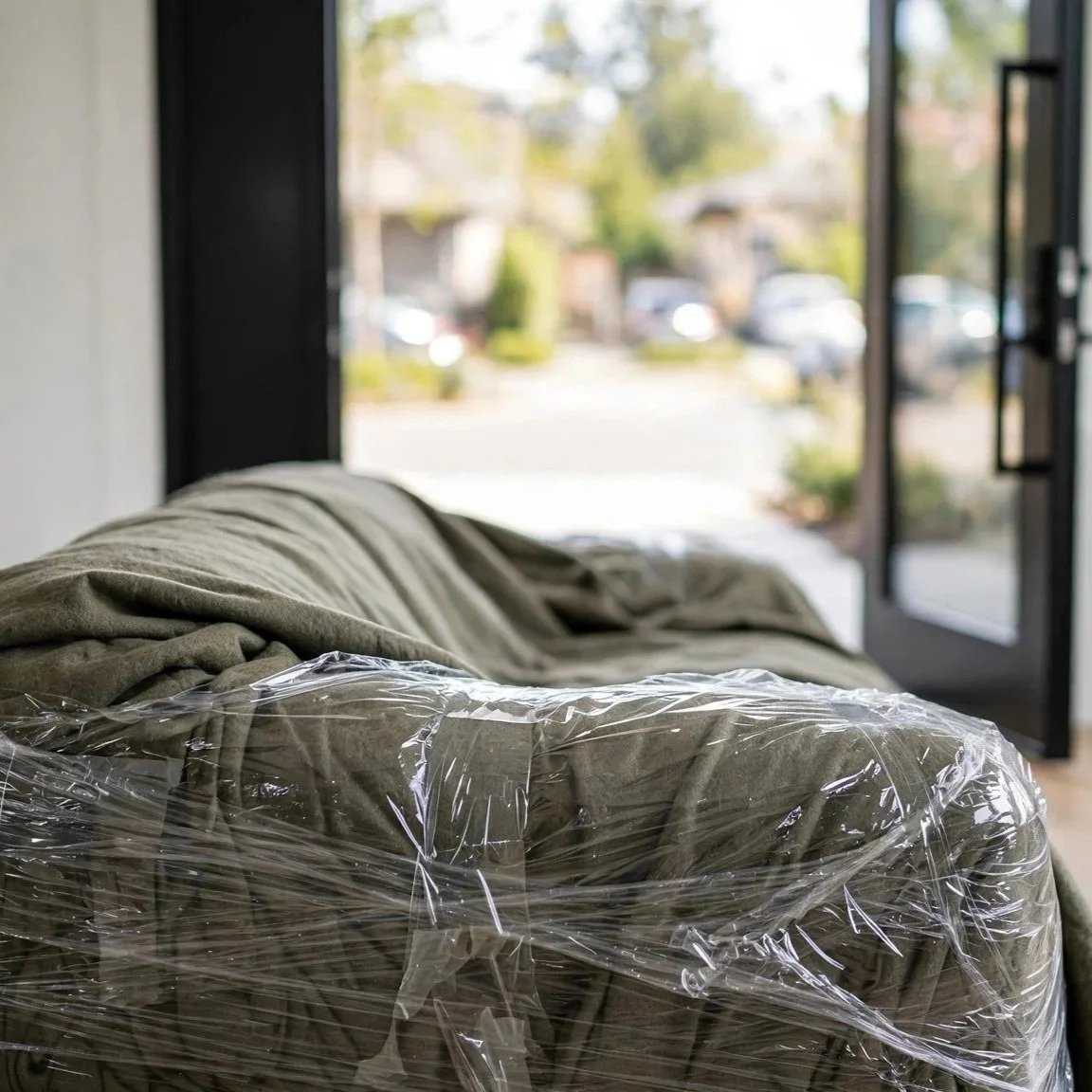
The Delivery Spectrum, From Curb to Fully Placed
Think of the four service levels as rungs on a ladder. Each rung adds distance into the home and adds tasks the crew completes for you. The heavier and more valuable the item, the higher up the ladder most buyers need to go.
Curbside delivery: The item is unloaded and left at the curb, driveway, or a spot near the entrance. The carrier does not enter the property, and moving the box the rest of the way is on you. Curbside is common for freight-style shipments where a lift-gate truck lowers the item to ground level. It costs the least and moves the fastest for the carrier, but it leaves the hardest part, getting a heavy box indoors, entirely in the customer's hands.
Threshold delivery: Here the crew crosses the first entry point and sets the item down just inside, which is where a lot of confusion starts.
What "threshold" really means: Threshold usually means the first dry, covered area past the outermost door: the entry foyer, the inside of the front door, or the garage. It generally does not mean up a flight of stairs, down a hallway, or into a specific upstairs bedroom. The goal is to get the item off the truck and out of the weather, not to place it. If you live in a third-floor walk-up, a threshold delivery may leave a heavy box at the building's ground-floor entrance. Reading the fine print on stairs and elevators before you order prevents a frustrating surprise on delivery day.
Room-of-Choice and White-Glove: The Higher Rungs
The top two levels are where the crew takes over the physical risk of moving a large piece and, in the case of white-glove, finishes the setup.
Room-of-choice delivery: The crew carries the item to the exact room you designate, including up or down stairs when the path allows. A mattress lands in the bedroom, a sectional lands in the living room, a treadmill lands in the home gym. The item typically arrives still boxed or wrapped; the crew does not assemble it or remove the packaging. Room-of-choice is the dividing line between "you handle the heavy carry" and "the crew handles the heavy carry."
Full white-glove delivery: This is the top rung and includes everything room-of-choice does, plus the finishing work:
What white-glove adds beyond the carry
Removing the packaging and box materials, and carrying that debris away
Assembling the piece to the manufacturer's guidance, from bed frames to sectional connectors to table legs
Placing and leveling the item where you want it, then a basic wipe-down or inspection
Optional haul-away of your old furniture or mattress, where the service offers it
White-glove turns a delivery into a finished setup. You point to a corner, and the crew leaves the room looking like the catalog photo, with no cardboard mountain by the door.
What Each Level Includes and Leaves Out
A quick way to keep the four straight is to ask two questions of any option: how far into the home does the item go, and how much of the work is finished when the crew leaves.
Curbside: goes to the property edge; nothing is assembled or carried inside. Best when you have help and a short, flat path.
Threshold: goes just inside the first door or garage; no room placement, usually no stairs. A middle step for buyers who can manage the last stretch themselves.
Room-of-choice: goes to your chosen room, stairs included when accessible; still boxed, no assembly. The right call for heavy items you cannot safely carry alone.
White-glove: goes to the room, then unpacked, assembled, placed, and cleaned up, sometimes with old-item removal. Built for large, high-value, or assembly-heavy pieces.
The gaps matter as much as the inclusions. Threshold does not mean placement. Room-of-choice does not mean assembly. Only white-glove routinely includes packaging and debris removal. Knowing what a level leaves out is how you avoid paying for less handling than the piece actually needs.
Matching the Level to the Item
The item itself usually points to the right level. Weight, size, value, and whether it needs assembly are the deciding factors.
Light, boxable items: A nightstand, a small bookshelf, a boxed office chair, or anything one person can lift and unbox often does fine with curbside or threshold. Paying for room-of-choice on a 20-pound box rarely earns its keep.
Heavy or bulky pieces: A sleeper sofa, a solid-wood dresser, a large sectional, a king-size mattress, or a piano-adjacent weight class is where room-of-choice starts to pay off. Large furniture is a genuine team-lift job. Trying to muscle a heavy, awkward piece up a staircase alone risks a pulled back, a dropped item, gouged walls, and cracked banisters. The higher service levels exist largely to move that risk from the customer to a trained two-person crew.
High-value or assembly-heavy pieces: A premium mattress, a leather sectional with connectors, a motorized adjustable bed base, or a designer dining set benefits from white-glove. The crew unboxes without blade-nicking the upholstery, assembles to spec so warranties stay intact, and inspects for transit damage before signing off. For an expensive piece, that careful in-home handling protects both the product and your floors and doorframes on the way in.
Why the Top Levels Protect the Product and the Home
For a big item, the trip from truck to final spot is the most dangerous stretch of its whole life. Room-of-choice and white-glove reduce damage on both sides of that trip.
A trained crew knows how to pivot a wide sofa through a narrow doorway and open packaging without slicing the finish. They carry rather than drag, watch door casings and stair rails, and pad tight turns. A boxed item dragged inside by one tired person is far more likely to end with a scuffed wall or a torn seam. Higher service levels are less a luxury than damage insurance for the two most expensive things involved: your furniture and your house.
Planning That Makes Any Level Go Smoothly
Whatever level you choose, a little prep keeps the delivery quick and damage-free. The single most useful habit is measuring before the truck arrives.
Clear and protect the route: Move rugs, floor lamps, and fragile decor off the path. Corral pets and kids away from the door. If rain or heat is a factor, a clear, direct route lets the crew move fast and keep the item covered.
Confirm the details ahead of time: Ask whether the level you picked includes stairs, assembly, and packaging removal, and whether old-item haul-away is available. Have the delivery window, a working phone number, and any gate or building-access codes ready so the crew is not stuck at the entrance.
How Retailers Pick a Delivery Level
Retailers do not attach service levels at random. They match the level to the product and to what the buyer expects when the box arrives. A flat-pack accessory ships threshold because the customer can handle it and expects a fast, low-cost option. A premium mattress or a full-motion sectional ships white-glove because the brand's reputation rides on the piece arriving assembled, undamaged, and ready to use.
Cost is part of the decision on both sides. Deeper service means more crew time and more careful handling, so it carries a higher price, sometimes bundled into "free delivery" and sometimes offered as a paid upgrade at checkout. Retailers weigh that against returns and damage claims: a scratched high-end piece dragged in by the customer can cost far more in refunds and reviews than a white-glove crew would have. For heavy, high-value goods, the higher level is often the cheaper choice once damaged returns are counted. That is why so many furniture and mattress brands lean on dedicated final-mile partners for their premium lines.
FAQs
Do delivery crews take the item up stairs at every service level?
Not always. Curbside never includes stairs. Threshold usually stops at the ground-floor entry, so a walk-up apartment may get the item left at the building door. Room-of-choice and white-glove generally do include stairs when the staircase is safe and wide enough, but many services cap the number of flights or add a fee beyond a set count. Some crews will decline a staircase they judge structurally unsafe or too narrow to clear the piece. Confirm the flight limit and any stair policy before delivery day.
Is white-glove delivery available for items I assemble myself, like flat-pack furniture?
It can be, but it is often not worth it for true flat-pack. Ready-to-assemble pieces are usually light enough for threshold or room-of-choice, and their instructions assume a homeowner build. White-glove assembly earns its keep on heavy or complicated items, adjustable bed bases, sectionals with hidden connectors, glass-top tables, where a wrong step risks damage or voids a warranty. For a simple particle-board bookcase, the assembly upcharge rarely pays off.
What happens if the item will not fit through my door on delivery day?
If a piece will not clear the doorway, the crew's options depend on the level and the situation. They may try an alternate entrance, remove the door from its hinges, or, on some sofas, detach legs or back cushions to slim the profile. If nothing works, the item usually goes back on the truck and becomes a return or an exchange, sometimes with a restocking or redelivery charge. This is exactly why measuring the narrowest point on the path in advance saves the most grief.
How long does a white-glove delivery usually take inside the home?
A single-item white-glove appointment often runs 20 to 45 minutes indoors, depending on assembly. A boxed sectional that needs connectors, leg attachment, placement, and packaging removal sits at the longer end, while a pre-built dresser that only needs carrying is quick. Delivery companies typically give a multi-hour arrival window rather than an exact time because route traffic and prior stops shift the schedule.
Can I switch to a higher delivery level after I have already ordered?
Sometimes, if you ask before the item ships. Many retailers can upgrade curbside or threshold to room-of-choice or white-glove while the order is still being scheduled, usually for the price difference. Once the shipment is on a truck or routed to a local final-mile hub, changing the level gets harder and may require rescheduling. Calling as soon as you realize the piece is heavier or more complex than expected gives you the best shot at an upgrade.
Does haul-away of my old furniture come standard with white-glove?
Not automatically. Old-item removal is a common white-glove add-on, but it is frequently a separate option you select and sometimes a separate charge, not a default inclusion. Where it is offered, there are usually limits: the crew removes the one piece being replaced, the item must be emptied and detached, and mattresses often need to be in sanitary condition to be accepted. Confirm haul-away is on your order rather than assuming it rides along with the white-glove label.
Getting the right piece into the right room without a scratch comes down to matching the service level to the item and prepping the path before the truck arrives. When the piece is heavy, valuable, or needs assembly, the higher levels protect both the furniture and your home.