
Do Delivery Crews Assemble Furniture? What Each Tier Covers
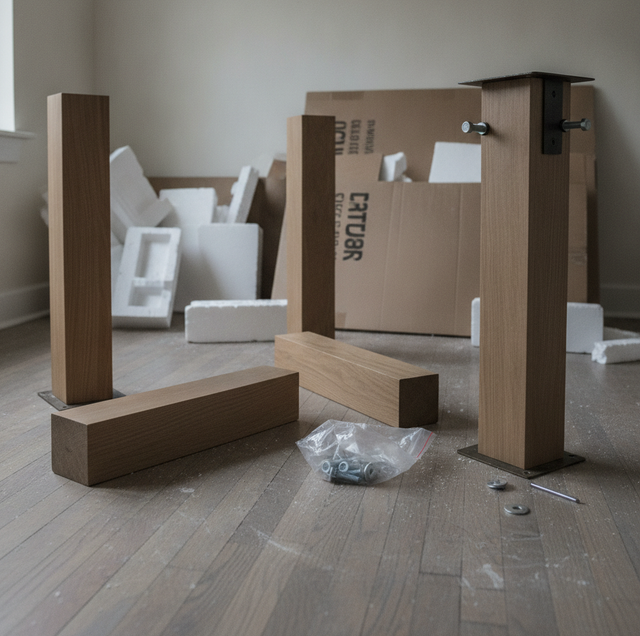
The dresser arrives on a pallet, still shrink-wrapped, and the crew is already asking where you want it. What happens next depends almost entirely on one line you may not remember choosing at checkout: the delivery level you paid for. Some crews carry the box to your door and nothing more. Others cut the packaging, bolt the frame together, set the piece where you want, and load the cardboard back onto the truck. The honest answer to whether a crew assembles your furniture is that it depends on the tier, and the tier is worth pinning down before the truck leaves the warehouse.
This guide walks the service levels from lightest to fullest, explains what assembly usually covers and where it stops, and flags the details buyers most often miss, from wall-anchoring a tall dresser to inspecting the piece before you sign.
Threshold and Curbside: The Item Arrives, Nothing Else
Threshold and curbside delivery are the baseline, and they include no assembly at all. With curbside, the driver brings the shipment to the end of your driveway or the curb, and it is yours from there; on many routes, a single driver is not obligated to lift a heavy piece off the liftgate for you. Threshold goes one small step further, placing the item just inside the first doorway, a garage, a lobby, or an entry hall, but not upstairs and not into the room you actually want it in.
Both levels leave the piece boxed. No one cuts the shrink-wrap, attaches legs, or removes a scrap of cardboard. This is the tier most online retailers quietly default to because it is the cheapest to fulfill, which is why a flat-packed sectional can end up sitting in your foyer in three cartons. If a listing simply says "free shipping" with no upgrade named, assume threshold and plan to do the building and the box breakdown yourself.
Room of Choice: Carried In and Set Down, Still in the Box
Room-of-choice delivery is the middle rung. The crew, usually a two-person team, carries the item past the entry, up a flight of stairs if needed, and sets it down in whatever room you designate. That saves your back on the heavy carry, which is the whole point of the tier.
It typically does not include assembly or unboxing. The item lands in the right room, but often still in its packaging, and putting it together and clearing the cardboard remains your job. It is a common upgrade for buyers who can handle a screwdriver but do not want to wrestle a queen mattress up a staircase alone. Read the tier description closely, though, because some retailers fold light setup into the room of choice while others keep it strictly carry-and-place.
White-Glove or Full-Service: Unbox, Assemble, Place, Haul Away
White-glove delivery, sometimes listed as full-service, is the tier people picture when they imagine a crew "setting up" their furniture. A trained team brings the piece to the room of your choice, removes the packaging, assembles the item, positions it where you want it, and carries the boxes, foam, and shrink-wrap back out. You end up with a finished, placed piece and a clean floor rather than a pile of flattened cartons.
Assembly at this tier usually covers the joinery of a piece that ships disassembled to save freight space: attaching legs to a sofa or table, bolting together a bed frame with its rails and slats, fitting a table base or pedestal, and connecting sectional modules so the seat lines up flush. On a platform or storage bed, the crew builds the frame and sets the mattress on top. This is genuine assembly, not just carrying a box in and slicing the tape.
Where Assembly Stops: What Even White-Glove Usually Skips
Even at the top tier, "assembly" has a narrower boundary than buyers expect. Standard white-glove covers the furniture's own parts, not anything that touches your home's structure or systems.
Wall-anchoring a tall dresser or bookcase for tip-over safety is often omitted or offered only as an add-on because it requires drilling into your wall and locating a stud. Wall-mounting a TV, hard-wiring a light or motorized recliner beyond plugging into an existing outlet, plumbing connections, and appliance hookups typically fall outside a furniture crew's scope entirely. If your piece needs one of those, ask before delivery day whether the crew handles it, whether it costs extra, and whether they carry the right anchors and hardware.
What Full-Service Costs, and Why
Because it bundles labor, time, and often a two- or three-person crew, white-glove delivery generally costs more than threshold or room-of-choice delivery, and on some orders, it is a paid upgrade rather than a free option. The reason is simple math: unboxing, assembling, placing, and hauling away the packaging takes a crew far longer at your door than a curbside drop in minutes. National retailers price it as a surcharge that scales with the piece's size and complexity.
Whether it is worth it depends on the item. A flat-pack bookshelf you can build in twenty minutes may not justify the upgrade; a heavy sectional, a king bed, or an armoire that needs two people often does. The mistake to avoid is assuming full-service is included when you only paid for threshold, then finding a boxed wardrobe in your entryway.
Confirming the Tier and Protecting Yourself at the Door
Delivery levels are usually chosen at checkout, and the wording varies by retailer, so read the exact service line before you buy rather than trusting a mental picture of what "delivery" means. If it is unclear, call and ask plainly whether the crew unpacks, assembles, places, and removes packaging, or simply drops the box.
Two things matter once the truck arrives. First, delivery windows: most carriers schedule a multi-hour arrival window rather than an exact minute, so someone should be home for the entire window, with the path from the truck to the room cleared of rugs, cords, and clutter. Second, inspection: look the piece over before you sign the delivery receipt. Signing generally confirms you received it in good condition, so a gouge, a cracked leg, or a dented panel is far easier to resolve when noted on the paperwork at the door than reported days later. Flagging any issue on the spot, in writing, protects you either way.
Matching the Service Level to the Piece
The takeaway is less about any single crew and more about reading the tier you buy. Threshold and curbside get the item to your door or just inside, boxed and untouched. Room of choice carries it to the right room; it's still your job to build. White-glove unboxing, assembling the furniture's parts, placing it, and taking the trash, though it usually stops short of drilling into walls or touching plumbing and wiring. Decide which outcome you want, confirm it in the order, and make it so the crew assembles your furniture so it's no longer a surprise.
FAQs
How long does the crew spend at my home, and what happens on delivery day?
It varies with the service level and the piece. A curbside or threshold drop is over in minutes, while a white-glove delivery of a bed, armoire, or modular sofa can keep a two- or three-person crew at your home anywhere from a short set-up to well over an hour once you count unboxing, assembly, placement, and carrying the packaging back out. Expect a scheduled delivery window rather than an exact time, and plan to have someone home to point the crew to the room and confirm the layout. Look the piece over before you sign, because signing usually means you are accepting it in good condition, and clear the path and the destination spot ahead of time to keep the visit short.
Will the crew anchor a tall dresser to the wall so it can't tip?
Usually not included in standard delivery, even at the white-glove tier, and this is a real safety gap. Anti-tip anchoring means drilling into drywall, finding a stud, or using a proper toggle, and fastening the supplied tip-restraint strap, which many crews treat as an add-on or decline because it involves your wall rather than the furniture. Tall, top-heavy dressers and bookcases are exactly the pieces regulators flag for tip-over risk, so ask in advance whether the crew will install the anchor and carry the hardware, or be ready to mount it yourself right after they leave.
How do I tell which delivery level I actually paid for?
Check the shipping line on your order confirmation for the exact term. "Curbside," "threshold," or "free shipping" with no upgrade named almost always means a boxed drop with no assembly; "room of choice" means carried to the room but generally still boxed; "white-glove," "full-service," "premium," or "in-home setup" means unbox, assemble, place, and remove packaging. If the wording is vague, call before the delivery date and ask directly: Do you unbox, assemble, place, and haul away the boxes?
What should I measure and check before the furniture arrives?
The measurements are what prevent a failed delivery. Before the truck comes, measure the width of every doorway, the tightest hallway turn, and any stairwell or lift the piece has to pass, then compare them against the furniture's depth and diagonal, not just its width, since crews often angle a piece through an opening. Watch for low ceilings on a stair landing, sharp corners, and railings that pinch a stairway. If a large sofa or sectional cannot make a turn, knowing in advance lets the crew plan to bring it in partly disassembled or through another entrance, rather than discovering at the door that it will not fit, which is the most common avoidable reason a delivery gets turned away.
Do they take away my old furniture or the packaging?
These are two separate things. White-glove delivery typically removes the new item's packaging (boxes, foam, and shrink-wrap) as part of the service. Hauling away your existing furniture, a mattress, or an old sofa is a different offering that is not automatic and is often a paid add-on, where it exists at all, since it changes what the crew loads back onto the truck. If you need the old piece gone, arrange it when you book rather than hoping the crew takes it on the spot.
Should I tip the delivery crew, and what should I have ready?
Tipping is customary for in-home and white-glove delivery, commonly a modest per-person amount, with more for a difficult carry up several flights or a complex assembly; a boxed curbside drop draws less. Beyond the tip, prep the route: ensure the piece clears doorways and tight turns, move rugs, cords, and low furniture out of the path, protect a delicate floor, and decide the exact spot before the crew arrives so they can place it once. Being reachable throughout the window prevents a scheduled stop from being missed or rescheduled.