
Assembled vs. Flat-Pack Delivery: Which Saves Your Weekend
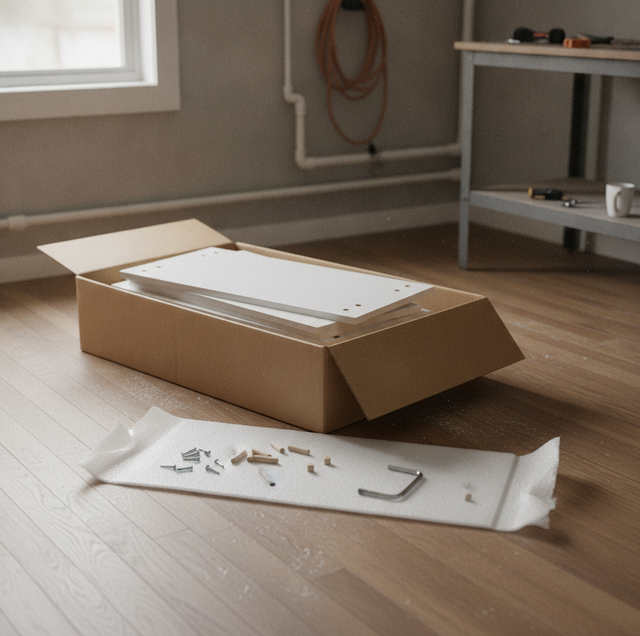
When a big piece of furniture is on its way to you, the box on the truck is only half the story. How that item reaches its final spot in your home depends on which delivery model you chose, and the two common ones ask very different things of you. One leaves the work in your hands. The other does the work for you and hands you a finished piece.
Understanding the mechanics of each, before you check out, saves you from the moment a 200-pound carton lands on your porch with an Allen key taped to the side and a stairwell it was never going to clear.
How Each Delivery Model Actually Works
The difference between these two options comes down to a single question: who does the labor once the item leaves the truck?
With flat-pack, the manufacturer ships the piece disassembled and boxed. A bed frame becomes a flat carton of rails, slats, and hardware. A wardrobe arrives as panels stacked in cardboard. Because nothing is put together yet, the shipment is lighter, more compact, and cheaper to move across the country. That is why so much online furniture travels this way. The trade-off lands on your side of the door. You open the boxes, sort the hardware, follow the diagram, and build the piece yourself, which means your time, your tools, and your patience are part of the deal.
Assembled delivery, usually sold as white-glove service, flips that arrangement. A trained crew brings the item into your home, carries it to the room you name, assembles it on the spot, and removes the packaging when they finish. For heavy or awkward pieces, that crew is the whole point. They handle the weight, manage stairs and corners, protect your floors and walls, and leave you with a piece ready to use.
Think of it like a restaurant. Flat-pack is a meal kit shipped to your kitchen: cheaper, everything included, but you still cook it. White-glove is the dish brought to your table, plated and ready. Both feed you. Only one asks you to do the work.
The Middle Ground: Curbside, Threshold, and White-Glove
"Delivery" is not one service, and the biggest source of confusion is that the same word covers levels of help that differ enormously. Before you pick, it helps to see where the handoff happens in each tier.
| Service level | Who assembles | Where it lands | Packaging | Access needed | Old-item removal |
|---|---|---|---|---|---|
| Curbside | You | At the curb, door, or garage | You keep it | Minimal; truck access only | No |
| Threshold | You | Just inside the first dry area | You keep it | Room for one carton indoors | No |
| White-glove | The crew | The exact room and spot you choose | The crew removes it | Clear path to the room | Often available |
Curbside is the leanest tier. The boxed item comes off the truck and stops at your curb, front door, or garage, and everything past that point is yours to manage. Threshold moves the box a step further, just inside your entry, so it is out of the weather, but you still carry, unbox, and build. White-glove is the full-service end of the range, where placement, assembly, and cleanup are all part of the job.
Most flat-pack shipments arrive curbside or threshold. Most assembled deliveries are white-glove. Knowing which tier you bought tells you exactly how much of the work is still yours when the truck pulls away.
When Flat-Pack Is the Right Call
Flat-pack earns its place in several real situations, and it is not simply the budget option by default.
Simple pieces are the clearest fit. A nightstand, a small bookshelf, or a basic bed frame with a dozen fasteners is a reasonable evening project for most people. If you are comfortable reading an assembly diagram and own a screwdriver and maybe a drill, you are not gaining much by paying someone to do it.
Tight access is the other strong case, and it is often overlooked. A boxed piece can be carried in sections, which matters in older homes and apartments with narrow halls, sharp turns, or steep, enclosed stairwells. A shipment that arrives in parts gives you options that a single, bulky, assembled piece cannot.
Flat-pack also fits people who truly enjoy the build or want to inspect every component as it goes together. The cost savings on shipping are real, since a compact carton is cheaper to move than a fully built piece that takes up a truck's cubic space.
When Assembled, White-Glove Is Worth It
The assembled route makes sense whenever the piece, the path, or your time makes DIY a poor trade.
Heavy and complex items top the list. A sectional sofa, a solid-wood armoire, a king bed with a slatted platform, or anything with dozens of parts and a fussy build sequence is exactly what a trained crew handles daily. They know the order of operations and carry the tools, so a piece that might eat your entire Saturday goes together in a fraction of the time.
Stairs change the calculation completely. Moving a dresser or headboard up a flight is a two-person job at minimum, and doing it wrong risks the furniture, the wall, and your back. This is why crews arrive with straps and dollies: the straps let two people share and control a heavy load on a staircase, and the dolly takes the strain on flat runs so nothing gets dropped or dragged. That equipment is a safety measure, not a luxury.
White-glove also fits older or tight homes where wall and floor protection matters, and it suits anyone who simply does not have the time, the tools, or the second set of hands. Valuable pieces belong here, too, since professional handling lowers the odds of a scratch or a stress crack during the trickiest part of the trip, the part between the truck and the room.
The Inspection Difference No One Mentions
One quiet advantage of assembled delivery is the built-in quality check. A white-glove crew assembles the piece while standing in your home, which means any flaw will show up in front of a witness. You get to look the finished item over, confirm it is built correctly and undamaged, and note anything wrong on the spot while the crew is still there to see it.
That timing matters more than it sounds. Problems caught at the moment of delivery are simply easier to resolve than problems discovered later, alone, with a half-built piece and a suspicion that the crack was there when it arrived. The service level you choose quietly decides how easy your after-the-fact conversation will be.
Matching the Model to Your Situation
There is no universal winner between these two. The right choice is the one that matches the item, your home, and your appetite for the work.
Reach for a flat-pack when the piece is simple, your access is tight, and you are comfortable building. Reach for assembled white-glove service when the piece is heavy, complex, or valuable; when stairs are involved; when your home is older or hard to move through; or when your time is worth more than the labor. The most expensive delivery is the one that leaves a scratched floor, a damaged piece, or a box you cannot get up the stairs.
FAQs
What's the difference between white-glove and "threshold" or curbside delivery?
The biggest practical gap is how the appointment itself works. Curbside and threshold usually arrive in a wider, less precise delivery window, and you sign for a sealed carton that you then open on your own schedule. White-glove is a scheduled appointment where the crew waits while you inspect the assembled piece before they leave. So, beyond who carries and builds the item, the tiers differ in how much of your day they pin down and whether anyone is standing there when you first see the finished piece.
Who is responsible if a flat-pack item is missing a part or arrives damaged?
Report the damage or missing part within the retailer's claim window, which is often just a couple of days, and keep all pieces of the original packaging. A carrier or retailer claim usually requires the carton, the foam, and photos as documentation, so tossing the box first can weaken your case. Note the model number and the specific part while you file, since a missing bolt or bracket is frequently sent on its own once the item is identified. The faster you open and check the cartons, the more room you have inside that window to act.
Does the flat-pack really fit through tight doorways better?
Measure before you order, because the answer depends on the numbers you can check in advance. Take the narrowest doorway and the tightest stair turn on the path, then compare them against the assembled piece's largest diagonal, not just its listed width. A sofa that cannot make the turn in one solid piece may still fit as a flat-pack carried in sections, since each carton clears the corner on its own. That one measurement, done before checkout, tells you whether an assembled delivery is even physically possible for your home.
What does "room of choice" mean, and why does it matter?
Room of choice means the crew places the item in the exact room and spot you point to, rather than leaving it at the entry for you to move. That matters for anything you could not shift yourself, like a heavy dresser or a bed, headed upstairs. Without it, you have technically received the item, but still face the hardest part of the delivery on your own.
Should I inspect the item before the crew leaves?
Yes, and the key step is to write any damage or missing hardware onto the delivery receipt before you sign it. Signing a clean receipt can limit a later claim, because it records that the item arrived in good order, so the inspection has to happen while the crew is still there. Walk the drawers, doors, and finish, and check that nothing rattles loose inside. If something is off, describe it on the paperwork rather than accepting a verbal promise to sort it out afterward.
Can old-item removal and packaging haul-away be part of the delivery?
Often, yes, with white-glove. The crew can take the packaging away and haul off the old mattress or piece of furniture in the same trip, so you are not left with a pile of cardboard or a bulky item to dispose of yourself. A flat-pack drop-off does not include this, so plan on handling both the boxes and whatever the new piece replaces.