
Condo or High-Rise Move: What the Freight Elevator Decides
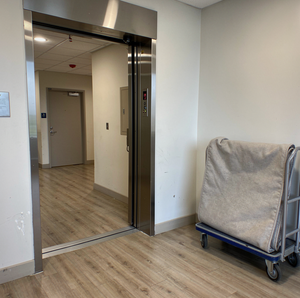
A move into a house runs on the household's schedule. A move into a condo or high-rise runs on two schedules at once, because the freight elevator, the loading area, and the hours a crew is allowed to work are shared property, booked through the building's management rather than owned by any one resident. A move date gets picked first, but the building decides when a crew can use the equipment that gets furniture from the truck to the unit, and that reservation sets the move day.
Quick Answer: A condo or high-rise move runs on the building's freight elevator reservation, its permitted move hours, and the paperwork management requires. The resident settles those with management ahead of the truck, and walks the corridor route with the crew.
Matching each building item to what the crew needs to know about it, and who settles it with management, keeps the reservation, the route and the paperwork lined up before the truck backs up to the dock:
| Building Item | What the Crew Needs to Know | Who Settles It |
|---|---|---|
| Freight elevator reservation | The exact window booked, and whether the building allows any grace on either end | The resident, confirmed with management |
| Elevator wall pads | Whether the building installs its own pads or expects the crew to bring padding for the cab | Building staff or the crew, by the building's policy |
| Loading dock or curb space | The exact spot the truck uses, and the distance from there to the freight car | The resident, checked against building rules |
| Permitted move hours | The start and end of the window, and any quiet-hours cutoff | Set by the building, confirmed by the resident |
| Paperwork management may request | What the building's office wants on file before move day | The resident, submitted to management |
| Corridor route from elevator to unit | Turns, doorways, and anything fixed to the hallway walls along the way | The resident, walked with the crew |
| Move-out and move-in on the same day | Whether both buildings' windows overlap enough for one truck to run both stops | The resident, confirmed with both buildings |
Reserving the Freight Elevator, and When a Building Has Only a Passenger Car
Reserving the freight elevator is the first building item to settle, because everything else on move day is scheduled around that window. A building can hold a single dedicated slot per move, one resident, one crew, one cab, for a set block of time. Booking it early secures both the date and a window long enough for the whole job, since a slot that ends before the truck is unloaded turns into a second reservation and a crew standing in a hallway with nowhere to put the next load.
Propping open a door the building keeps closed, or riding a freight elevator among unsecured furniture, risks a slamming door or a piece shifting and pinning a hand. The crew loads the cab so nothing rides loose.
A building without a dedicated freight car runs the same job through its passenger elevators instead, and that changes what the building controls. A passenger-only building can limit a move to one car, restrict it to one trip at a time so residents can still reach their floors, or require pads to go up before anything else moves. None of that is the crew's call: the building sets the rule for its own equipment, and a crew scopes the corridor, the doorways, and the number of trips a load will take around whatever the building allows, rather than assuming a freight car exists just because the building is tall enough to need one.
The freight elevator can open onto a back hallway or a loading level apart from the main lobby, and the building's management office knows which entrance the crew and the truck use.
The Route from Truck to Door
Once the elevator window is set, the route between the truck and the unit is the next thing to walk. A loading dock or a curb spot can sit well back from the freight car, which turns a short elevator ride into a long carry before anything even reaches the cab. Corridors add their own turns, and a hallway that looks wide enough on a walk-through can still pinch a large piece at a fire door, a mail alcove or a fixed bench bolted to the wall. Whether a specific piece will clear a given doorway or turn is its own measuring question, one worth settling before move day rather than at the door.
Building staff can flag a section of corridor as off-limits to protect flooring or wall finishes, and a crew plans around that boundary the same way it plans around a locked service entrance. Walking the full route once, from the exact parking spot to the unit's own door, shows what a floor plan leaves out, such as a threshold strip, a step, or a fire door that swings shut on its own.
Move Hours and the Building's Quiet Rules
A freight elevator reservation and the building's permitted move hours are not always the same window. Some buildings cap moves to weekday daytime hours regardless of when the elevator itself is free, so a crew booked for an evening slot can still run into a building rule that closes the loading dock earlier than the reservation allows. Weekend and holiday restrictions follow the same logic: the building, not the elevator schedule, decides which days a move is allowed at all.
Quiet-hours rules can apply even inside the permitted window, since dollies, straps, and a hand truck on a hard-surface corridor carry noise into neighboring units, and a building can ask for the loudest carrying to finish ahead of its cutoff. Confirming both the elevator window and the building's separate move-hours policy prevents a crew that is reserved and ready from still being permitted to start.
What Management May Ask for Before Move Day
Beyond the elevator reservation itself, a building's management office can want paperwork on file before it releases the freight car for a move. A certificate of insurance is one item worth asking the building about directly, since some management companies require one from whoever is moving furniture through their shared areas, while others do not. The requirement is set by the building, not by the household or the crew. Other buildings ask for a signed acknowledgment of the move rules, a deposit against damage to shared surfaces, or contact information for whoever is coordinating the day.
None of this is standard from one building to the next, which is why the paperwork question belongs with the same call that books the freight elevator rather than something left until the truck is already at the dock. A management office that has every document it wants on file ahead of time has no reason to hold up a reservation on move day itself, while a missing form can turn a confirmed window into a delay.
Coordinating a Move-Out from One Building and a Move-In at Another
A move between two managed buildings means two separate reservations, two separate sets of building rules, and two windows that have to work together. The move-out building's window decides when the truck can leave with a full load; the move-in building's window decides when that same truck is allowed to arrive and unload. If those two windows sit close together, a same-day move-out and move-in is realistic. If they sit far apart, or one building only runs moves on certain days, the two stops can land on separate days.
Confirming both buildings' reservations before either is finalized prevents a two-building move from turning into a mismatch discovered on the day itself, and the tighter of the two windows determines how much slack the day has.
Large Pieces That Have to Come Apart to Make the Trip
A corridor, a passenger car standing in for a freight elevator, or a tight turn near the loading dock can all make a piece too large to travel whole, even when it moved into the last place in one piece. Bed frames, large sectionals, and case pieces with removable tops are candidates, and taking them apart ahead of the elevator window, rather than discovering the fit problem at the cab door, keeps the reservation from running out on a piece that still has to be broken down.
Furniture disassembly and reassembly is part of the crew's work. A piece that comes apart cleanly can be reassembled in the new unit the same way. Flagging an oversized piece before move day, the same way an unusual corridor or a passenger-only elevator gets flagged, gives the crew time to plan which pieces travel whole and which ones travel in parts.
Frequently Asked Questions
What happens in a building that only has a passenger elevator, no freight car?
The building still determines how it gets used, and it may require a staff member or the property's own attendant to run the car during the reserved window rather than letting the crew operate it, which adds one more person's schedule the move has to fit around.
Can a freight elevator reservation be given up if the move date changes?
Yes, and building policy can call for early notice, since a released window can go to the next resident waiting for one rather than sitting open, so a move that gets pushed back is worth reporting right away rather than letting the reservation lapse.
Does the building check the corridor and elevator cab before and after the move?
Some buildings do a short walkthrough with a staff member both before the crew starts and again once the truck is loaded, comparing the corridor, door frames, and cab pads against how they looked at the start, so any new marks are noted on the spot rather than disputed later.
What if the move-out building and the move-in building do not have overlapping windows?
When the two reserved windows do not overlap, the load may stay on the truck or make a short staging stop between the two addresses rather than going directly from one building's dock to the other's, so both windows are confirmed before a same-day double move is booked.
Does a doorman or concierge desk track the move separately from the elevator reservation?
In a staffed building, the front desk can log who is carrying items in and out as its own visitor record, apart from the freight elevator booking, so a crew can check in at the lobby desk as a separate step from showing up for the reserved elevator window.
If a piece has never been taken apart before, does that change the freight elevator plan?
It can. A sectional or bed frame that has never been separated may require different hardware when it goes back together, so a piece with fasteners nobody has removed before gets flagged ahead of move day rather than being taken apart for the first time in a loading corridor.
Line up a local move for your condo or high-rise — freight elevator timing, the corridor route, building move hours, and furniture disassembly and reassembly. Miranda Delivery Service serves the Phoenix metro. Call (480) 389-5928.